
What Is Litecoin (LTC)? How It Works and Why It Matters
Let’s talk about what many crypto enthusiasts like to call the digital silver of blockchain – Litecoin.It’s one of the oldest forks of Bitcoin and often gets described as its biggest rival.…
All news

Published November 12, 2025 at 03:49 PMUpdated 12:55 AM
Let’s talk about what many crypto enthusiasts like to call the digital silver of blockchain – Litecoin.
It’s one of the oldest forks of Bitcoin and often gets described as its biggest rival. That’s not entirely true, though. Technically, any cryptocurrency used for payments can be seen as a competitor to Bitcoin. But the people behind Litecoin had a different vision. Their goal wasn’t to overthrow Bitcoin – it was to make sending value easier, faster, and cheaper. Think of it as a network designed to work alongside Bitcoin, not against it.
Bitcoin, on the other hand, is more like digital gold. Its supply is limited, much like the world’s reserves of real gold. That’s what makes it valuable – and also what makes it a little impractical for daily transactions. You wouldn’t walk into a café and pay for your coffee with a gold nugget, right? The same goes for Bitcoin – great for holding, not so great for quick payments. That’s where Litecoin steps in.
Historically, this dynamic isn’t new. When economies ran on gold, trade often slowed down because gold wasn’t convenient for small, everyday purchases. Silver filled that gap – it was easier to use while still holding real value. Gold stored wealth, silver kept it moving. Litecoin plays the same role in the crypto world today – it keeps value circulating.
What Is Litecoin?
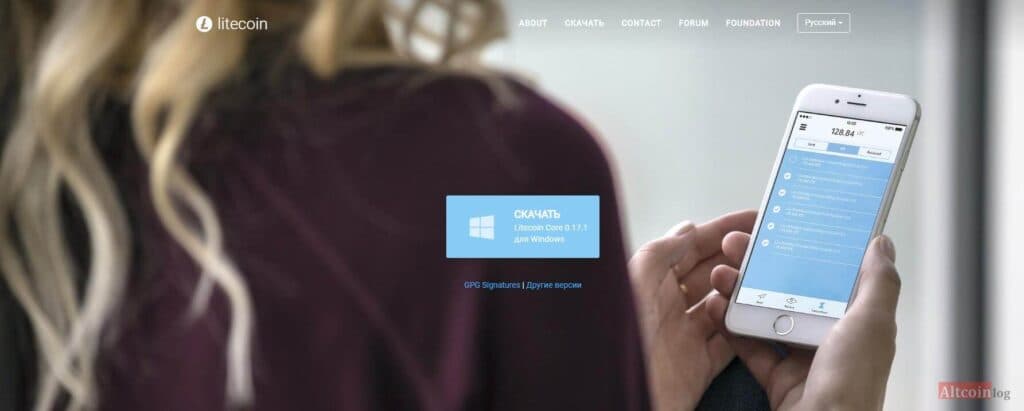
Litecoin is both a digital currency and a peer-to-peer payment system developed from Bitcoin’s original code. It lets users send money straight to one another – no banks, no middlemen, just fast and reliable blockchain transactions. You can swap Litecoin for Bitcoin or use it to pay wherever crypto payments are supported.
The coin was created by Charlie Lee, a former Google engineer, who introduced Litecoin in 2011. His vision was to design a version of Bitcoin that’s quicker, lighter, and easier for everyday use. From the start, Lee focused on transparency – Litecoin’s code was completely open-source, allowing anyone to study it, modify it, or build new projects on top of it.
Like Bitcoin, Litecoin has no central authority. It’s not run by banks or controlled by any company – ownership belongs entirely to the people who mine it or choose to hold LTC.
Official website: https://litecoin.org
Technical Details
Characteristic | Value |
Market capitalization | $12.5 billion |
Coins mined (Oct 2021) | 68,741,470 LTC |
Daily transactions | 60,482 |
Average fee | $0.02 |
Total blocks | 2,139,493 |
Blockchain size | 52.69 GB |
Block reward | 12.5 LTC |
Mining difficulty | 11.19 M |
Litecoin peaked in 2017, after which its price gradually rose. Three years ago, one coin was worth $267; as of October 22, 2021, the price was 13,632 RUB ($191.79).
Litecoin Mining
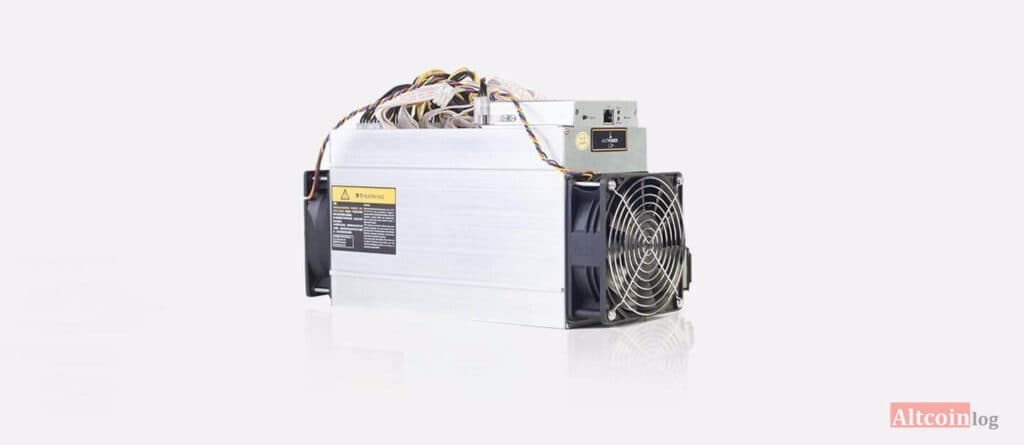
Litecoin mining is the process of generating LTC using specialized equipment. In 2025, the most profitable ASIC models are:
Model | Algorithm | Hashrate (MH/s) | Power (W) | Weight (kg) |
Antminer L7 9500/9160 | Scrypt | 9500/9160 | 3425/3225 | 15 |
Innosilicon A6+ LTC Master | Scrypt | 2200 | 2100 | 9.3 |
Antminer L3++ | Scrypt | 596 | 1050 | 6.5 |
ASIC miners are faster and more efficient than GPUs. They pay off quicker and require less technical setup, though they’re best for those treating mining as a full-time business. Even the older Antminer L3++ can earn about $6.98/day (excluding electricity costs), while the Antminer L7 9500Mh can make over $111/day.
You can mine LTC via Nicehash and withdraw earnings in Bitcoin or fiat.
Bitcoin vs. Litecoin – Key Differences
- Hash algorithm: Litecoin uses Scrypt, while Bitcoin uses SHA-256.
- Block time: Bitcoin – ~10 min; Litecoin — ~2.5 min.
- Total supply: Bitcoin – 21 million; Litecoin — 84 million.
- Mining: Litecoin’s Scrypt requires more RAM, reducing competition for hardware.
- Addresses: Litecoin addresses start with “L” or “3”, and are 33 characters long.
- Atomic swaps: Since 2017, Litecoin supports cross-chain swaps with other blockchains.
Buying Litecoin
Popular exchanges for trading LTC:
- Bybit
- Huobi Global
- CoinEx
- Gate.io
- MEXC
- KuCoin
- OKX
Bybit, the world’s leading exchange by trading volume, charges only 0.1% commission.
Trading pairs include:
LTC/USDT, LTC/BTC, LTC/ETH, LTC/USDC.
Tracking Litecoin Transactions
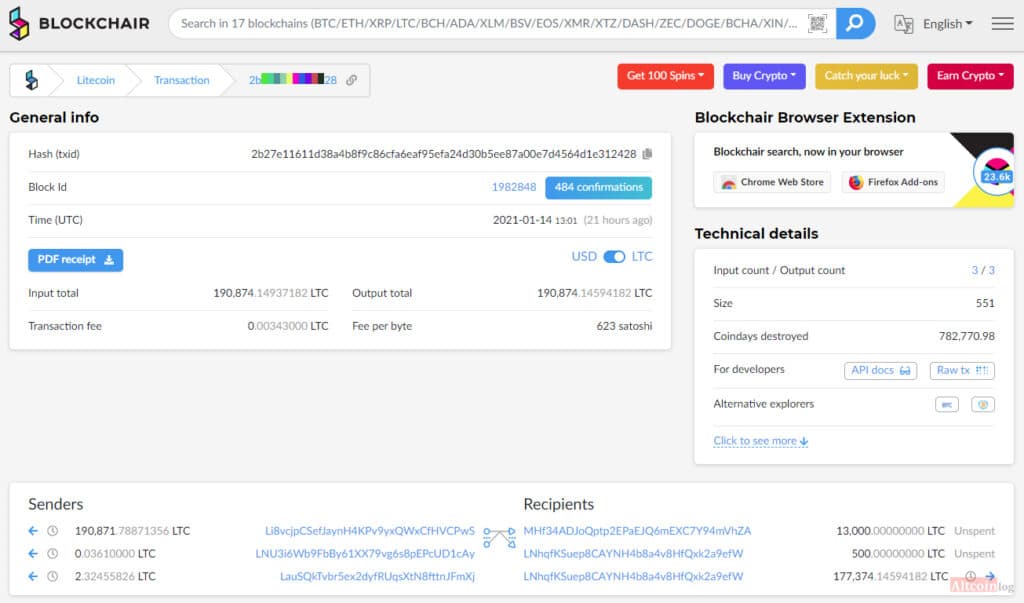
Use a block explorer like Blockchair.
It provides real-time information about LTC price, network difficulty, total blocks, mempool status, and transaction details (block ID, confirmations, fees, sender, receiver, etc.).
You can even export data as PDF.
Pros and Cons
Advantages:
- Scalable and efficient for payments.
- Faster block generation (2.5 minutes).
- Easier and cheaper mining than Bitcoin.
- Flexible and open to network improvements.
Disadvantages:
- The “digital silver” analogy is debatable.
- High mining rates may reduce profitability.
- More vulnerable to attacks.
- Declining popularity since 2017.
- Lower coin price than Bitcoin.
Future Prospects
Litecoin remains in the top 100 cryptocurrencies, though newer projects (Solana, Cardano, Dogecoin, Shiba Inu) have overtaken it. Still, LTC has survived multiple crypto winters, and ongoing ASIC production for its Scrypt algorithm shows strong demand.
Litecoin Foundation’s marketing and partnerships will determine its future – for example, AMC Theatres now accepts LTC for tickets.
If governments don’t follow China and Turkey’s example of banning crypto, Litecoin’s future remains stable. It may coexist with future state-issued digital currencies (crypto-dollar, crypto-euro) just as fiat coexists with crypto today.
Conclusion
Although most forks never outshine their originals, Litecoin has demonstrated impressive longevity. Its lower price and simpler mining process make it accessible to a broader audience – though it will likely remain in Bitcoin’s shadow. For miners, converting their LTC into BTC often makes practical sense.
As long as cryptocurrencies stay legal in major economies, Litecoin will continue to exist. But survival depends on usage, not just holding. The more people spend it, the more valuable and relevant it becomes in real circulation. Saving a bit for later is reasonable – yet keeping Litecoin active in transactions is what truly sustains its network and gives it lasting worth.
Subscribe to our Telegram channel and read the comments, where smart people sometimes write smart things.
This story is for information only and is not investment advice. Crypto assets are volatile and you can lose everything you put in. You decide on any trade yourself. Disclosure
Comments0
Comments are moderated. Ads, insults, and trading calls are removed. Discussion rules
No comments yet
Be the first — the author reads the thread and answers questions.