
What Is DeFi and How to Get Started
Learn what DeFi is, how decentralized finance works, what you can do with it and how beginners can safely get started with DeFi applications.
All news

Published August 14, 2026 at 01:03 PMUpdated 03:03 PM
Decentralized finance, usually called DeFi, has become one of the most important parts of the cryptocurrency industry. It allows users to exchange assets, lend and borrow money, earn rewards and use financial services without opening a traditional bank account.
For someone new to crypto, DeFi can seem complicated at first. There are wallets, smart contracts, liquidity pools, decentralized exchanges and many unfamiliar terms. However, the basic idea is quite simple: DeFi gives users direct access to financial services through blockchain technology.
What Is DeFi?
DeFi stands for Decentralized Finance. It is a collection of blockchain-based applications and services designed to provide financial functions without relying on a traditional centralized institution.
Instead of a bank processing a transaction or approving a loan, DeFi applications use smart contracts. These are programs stored on a blockchain that automatically execute predefined rules.
For example, instead of depositing cryptocurrency into a bank and asking the bank to lend it to someone else, a user can interact directly with a DeFi lending protocol. The smart contract handles the rules of the transaction.
The basic process is straightforward:
- Get cryptocurrency and transfer it to your wallet.
- Connect the wallet to a DeFi application.
- Choose the service you want to use.
- Check the transaction and network fee.
- Confirm the operation in your wallet.
What Can You Do With DeFi?
DeFi includes many different financial services. The most common ones are decentralized exchanges, lending platforms and liquidity pools.
Decentralized exchanges
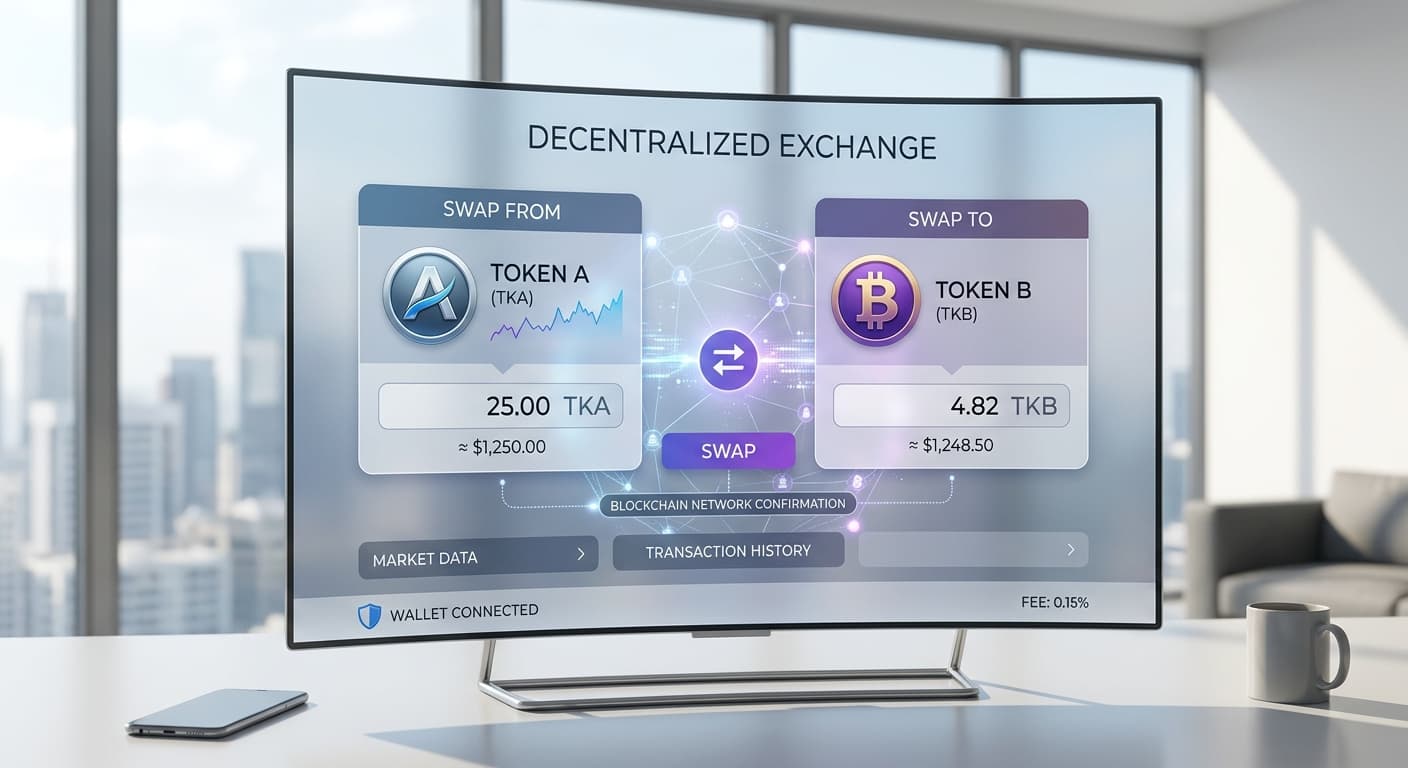
A DEX allows users to exchange cryptocurrencies directly through smart contracts. Unlike a centralized exchange, users generally do not need to deposit their assets into a traditional exchange account.
DEXs can also provide access to tokens that may not be available on large centralized platforms.
Lending and borrowing
DeFi lending platforms allow users to deposit cryptocurrency and potentially earn interest. Other users can borrow assets by providing collateral.
The rules are controlled by smart contracts rather than a bank. However, borrowers can face liquidation if the value of their collateral falls too much.
Liquidity pools
Many decentralized exchanges use liquidity pools instead of traditional order books. Users can deposit token pairs into these pools and receive a share of trading fees.
This can generate additional income, but liquidity providers also face risks such as impermanent loss, token volatility and smart contract vulnerabilities.
How to Get Started With DeFi
A beginner generally needs three things: a compatible crypto wallet, some cryptocurrency and access to a DeFi application.
Step 1: Set up a wallet
Choose a reputable self-custodial wallet that supports the blockchain you want to use. During setup, you will receive a seed phrase that can be used to recover your wallet.
Never share your seed phrase with anyone. Do not enter it into websites or send it to people claiming to be support staff.
Step 2: Fund your wallet
Transfer a small amount of cryptocurrency to your wallet. Always check the receiving address and make sure you are using the correct network.
Starting with a small amount is a good idea while you are still learning.
Step 3: Choose a DeFi application
Research the protocol before connecting your wallet. Check its official website, supported network and general reputation.
Avoid links from random messages, comments or suspicious advertisements.
Step 4: Start with a simple operation
For your first experience, a basic token swap may be easier to understand than lending or providing liquidity.
Before confirming a transaction, check exactly what your wallet is asking you to approve.

What Are the Risks?
DeFi gives users more control over their assets, but that also means more responsibility.
One major risk is smart contract vulnerabilities. A bug in a protocol can potentially result in users losing funds.
There is also cryptocurrency price volatility. Even if you earn interest or trading fees, the value of your assets can fall significantly.
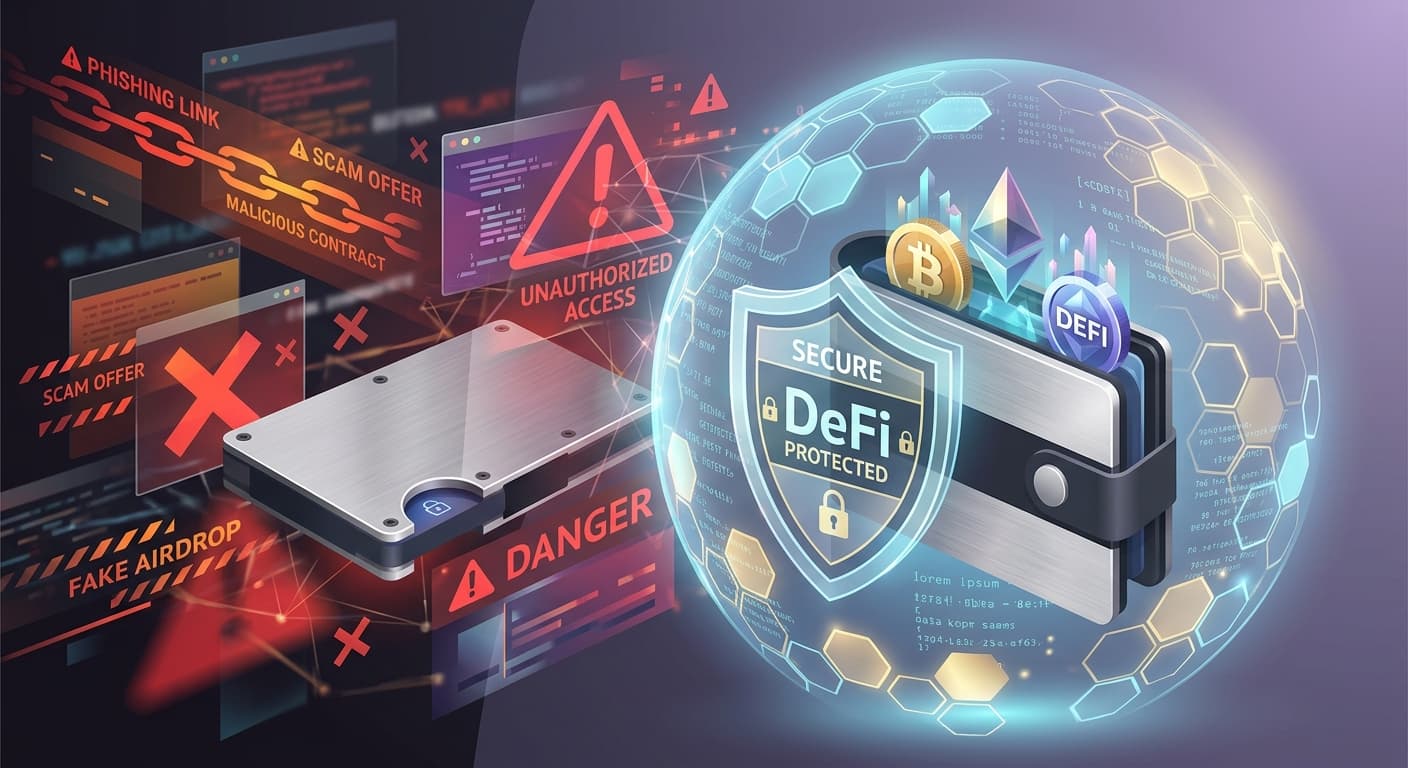
Another common threat is phishing. Fake DeFi websites can look almost identical to legitimate platforms and may try to trick users into connecting their wallets or revealing sensitive information.
Do not choose a DeFi service only because it offers extremely high returns. Higher yields often come with higher risks.
How to Use DeFi More Safely
If you are just starting, follow a few basic rules:
- Start with a small amount.
- Research every protocol before using it.
- Verify the website address.
- Keep your seed phrase private and offline.
- Never approve transactions you do not understand.
- Check network fees before confirming an operation.
- Be careful with unusually high APY offers.
DeFi can provide access to financial services without traditional intermediaries, but it requires users to take responsibility for their own funds. The safest way to begin is to learn the basics, start small and gradually explore more advanced services.
Tags
This story is for information only and is not investment advice. Crypto assets are volatile and you can lose everything you put in. You decide on any trade yourself. Disclosure
Comments0
Comments are moderated. Ads, insults, and trading calls are removed. Discussion rules
No comments yet
Be the first — the author reads the thread and answers questions.