
House panel advances Strategic Bitcoin Reserve bill with 20-year hold
The House Financial Services Committee formally reported H.R. 8957, the American Reserve Modernization Act of 2026, on Nov. 24, sending the full House a bill that would bar the Treasury from selling federal bitcoin for at least 20 years.
All news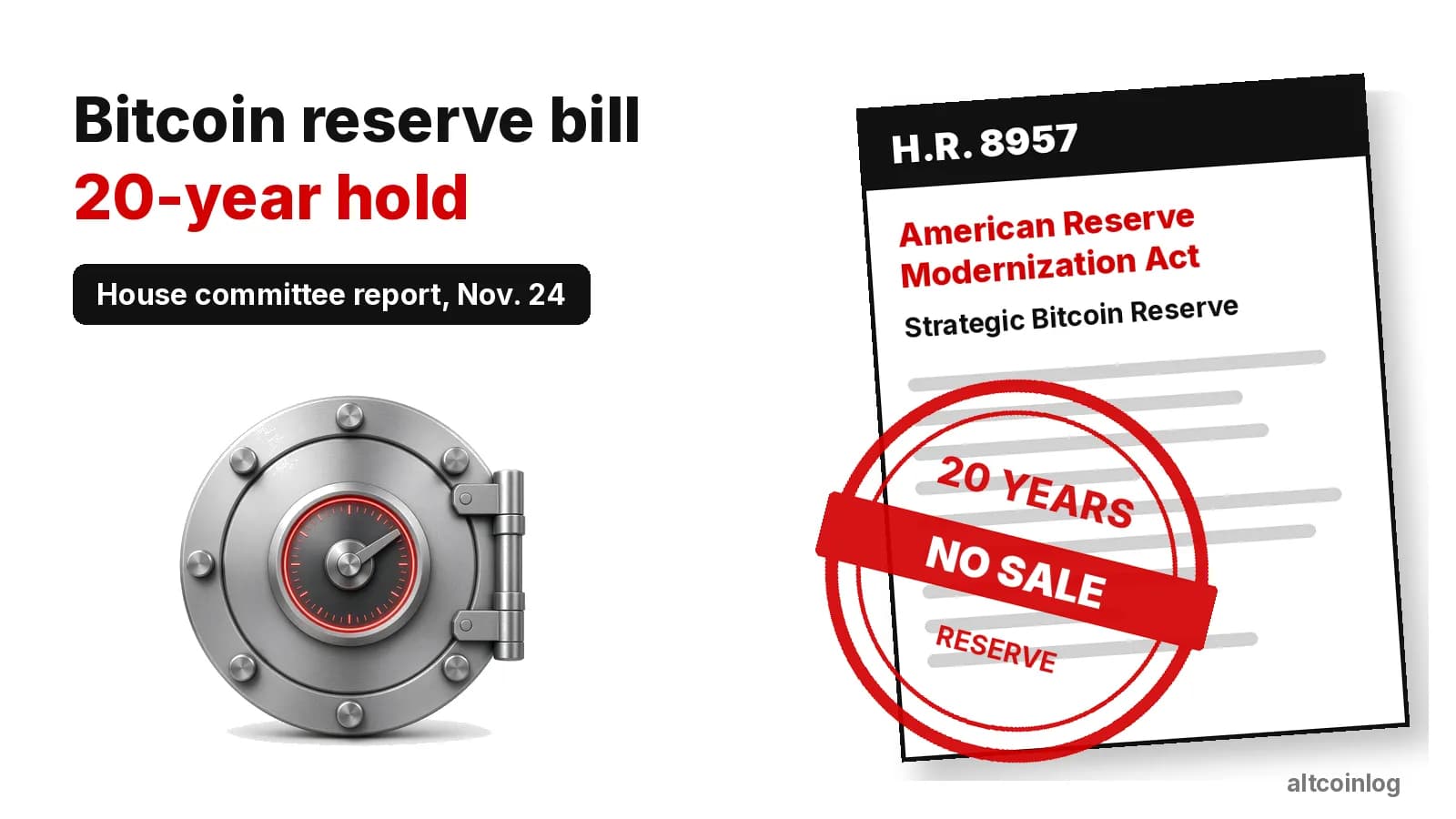
 Samuel EdymeAuthor · Investing
 Editor-in-ChiefEditor · checked this story
Published November 26, 2026 at 04:39 PMUpdated November 26, 2026 at 04:39 PM
The House Financial Services Committee formally reported H.R. 8957, the American Reserve Modernization Act of 2026, on Nov. 24, sending the full House a bill that would bar the Treasury from selling federal bitcoin for at least 20 years. The bill is now on the Union Calendar as No. 789, with committee report H. Rept. 119-894, according to its congress.gov record.
Rep. Nick Begich, an Alaska Republican, introduced the bill on May 21. It has 23 cosponsors, including one Democrat, Rep. Jared Golden of Maine. The committee voted 28 to 21 on Sept. 16 to advance an amended version, and the formal report followed two months later.
What the reported text locks up
Section 5 of the reported text on govinfo.gov tells the Treasury Secretary to hold all bitcoin deposited in a new Strategic Bitcoin Reserve "for not less than 20 years from the date of enactment." During that period no reserve bitcoin "may be sold, swapped, auctioned, encumbered, or otherwise disposed of for any purpose."
The reserve would hold "qualifying Bitcoin": coins the federal government owns and is not required by law to use for something else, chiefly coins finally forfeited in criminal or civil cases. Every agency would have 60 days after enactment to give the Treasury a full accounting of its bitcoin and other digital assets, and 30 days to move qualifying coins once the reserve exists.
The committee also changed the clock. The introduced version counted 20 years from the deposit date for coins added after enactment, while the reported version runs a single 20-year period from enactment. Once it ends, the Secretary may recommend selling up to 10% of the reserve in any two-year period. Within a year of enactment, the Treasury would also have to study when early sales might be justified, including for national security.
What changes for supply and price
The bill does not authorize buying bitcoin. The committee dropped the idea behind the "Federal Reserve" clause in the original title: the introduced text asked the Treasury to study purchases funded by Fed surplus remittances or a revaluation of gold certificates. The reported version keeps only a 180-day study of budget-neutral acquisition and says nothing in it allows borrowing, new taxes or deficit spending to buy bitcoin.
That makes the supply effect a question of selling. Coins the government already holds would stay off the market for two decades instead of going to auction, a different path from countries like Bhutan, where Bhutan has been selling its state bitcoin. The bill does not say how many coins are in scope; that figure would come from the agencies' accounting. For readers new to the asset, here is what bitcoin is.
Much of this already exists as policy. A March 6, 2025 executive order created a Strategic Bitcoin Reserve from forfeited coins and said they "shall not be sold." H.R. 8957 would write a fixed 20-year floor into statute, which a later executive order could not undo. It follows other federal moves on crypto, such as the CFTC decision that bitcoin, ether and stablecoins can count toward CFTC exchange reserves.
The bill still needs a House floor vote, Senate passage and a presidential signature. It also covers states: the Treasury would have a year to let any state store its own bitcoin in a segregated account inside the reserve, with the state keeping title and the right to withdraw.
This story is for information only and is not investment advice. Crypto assets are volatile and you can lose everything you put in. You decide on any trade yourself. Disclosure
Comments0
Comments are moderated. Ads, insults, and trading calls are removed. Discussion rules
No comments yet
Be the first — the author reads the thread and answers questions.