
US task force taps TRM Labs for a new center to block scam payments
The Homeland Security Task Force, a federal law enforcement network co-led by the Department of Homeland Security and the Justice Department, launched a Threat Disruption Center on Nov. 18.
All news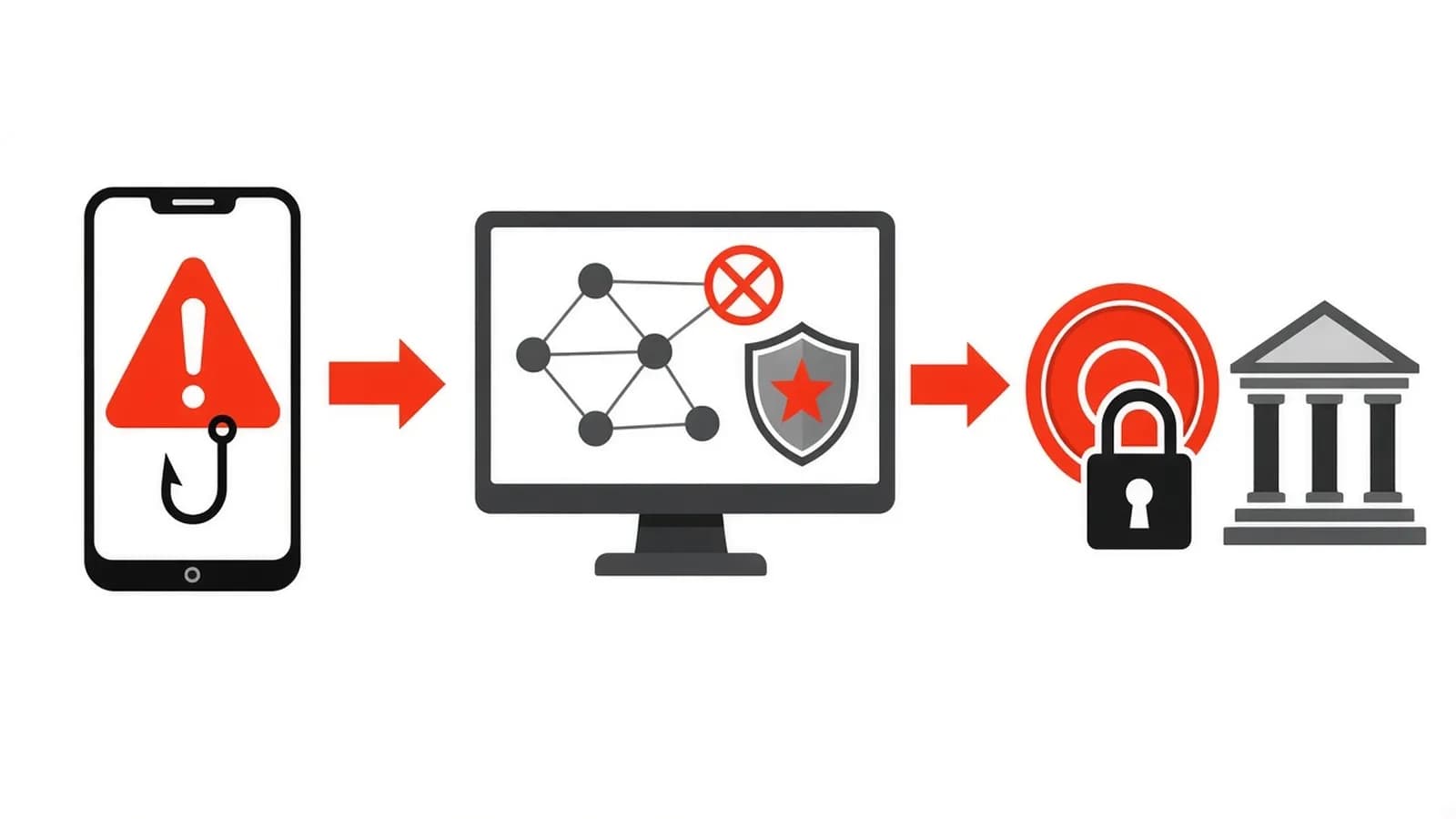
 Samuel EdymeAuthor · Investing
 Editor-in-ChiefEditor · checked this story
Published November 19, 2026 at 08:38 AMUpdated November 19, 2026 at 08:38 AM
The Homeland Security Task Force, a federal law enforcement network co-led by the Department of Homeland Security and the Justice Department, launched a Threat Disruption Center on Nov. 18. Its job is to stop money taken from American victims of scams, cybercrime and sextortion from reaching the foreign networks behind them, and it runs on software from blockchain analytics firm TRM Labs.
According to the hstf.gov announcement, the unit sits inside the task force's National Coordination Center in Fairfax, Virginia, and serves more than 30 federal agencies and over 440 state and local partners. It gives investigators tools to triage victim complaints and map the networks behind them, plus a direct line to companies that can warn victims or cut off criminal operations.
The case for the center is speed. "Every hour between a victim's report and a response gives criminals more time to launder stolen funds and identify their next target," said Heith Janke, operations director of the FBI's Criminal Branch. He said partners had already warned thousands of victims through Operation Level Up before they lost more.
Who freezes what, and how fast
The release describes no new legal powers. It sets up a standing channel for agencies and participating companies to share intelligence in near real time and turn it into action: pausing a victim's payment, taking down a scam domain, banning a social media account. Companies take those steps on their own under their terms of service, while agencies handle investigations, prosecutions and court-authorized seizures.
For crypto users, that makes exchanges and stablecoin issuers the first line. In its own trmlabs.com post, TRM, which has a commercial stake in the project, says the center will support "actions to block fraudulent payments and to freeze stolen funds." Its Beacon Network already pushes alerts from investigators to compliance teams at financial institutions, exchanges and stablecoin issuers.
After the October Binance hack, Binance said roughly $3 billion was frozen on-chain within a day, helped by stablecoin issuers that can block addresses, as we explained in why some of the stolen Binance funds were frozen and the rest were not. A freeze only stops coins from moving. Taking control of them is a court step, as in the DOJ's move to seize funds stolen in the Binance hack.
What TRM Labs brings
TRM is the center's primary private-sector partner. It will deploy Ardence, its "SI orchestration platform" (TRM uses SI for super intelligence), as the main investigative tool, with dedicated engineering and investigative support. TRM says the federal government "is investing millions" in the center. Neither TRM nor the task force states a contract value, and the task force release names no participating exchange, bank or platform.
Both releases cite the same toll. Losses reported to the FBI's Internet Crime Complaint Center reached $20.9 billion in 2025, which TRM puts at 26% above the year before. The National Center for Missing & Exploited Children received an average of 137 reports of financial sextortion of minors a day in 2025. Scams also run through the SEC's 2026 crypto fraud enforcement results.
The center implements Executive Order 14390, signed in March, which told agencies to create an operational cell inside the coordination center and to use private-sector intelligence. Section 3 of the whitehouse.gov text of the order asked the Attorney General to recommend a Victims Restoration Program that would repay victims of cyber-enabled fraud from funds clawed back, forfeited or seized from the groups behind it.
This story is for information only and is not investment advice. Crypto assets are volatile and you can lose everything you put in. You decide on any trade yourself. Disclosure
Comments0
Comments are moderated. Ads, insults, and trading calls are removed. Discussion rules
No comments yet
Be the first — the author reads the thread and answers questions.