
Coinbase Borrow opens in New York with an 86% liquidation line
New Yorkers can now borrow USDC against bitcoin, ether and Solana on Coinbase via Morpho, and the 86% liquidation trigger sets the risk.
All news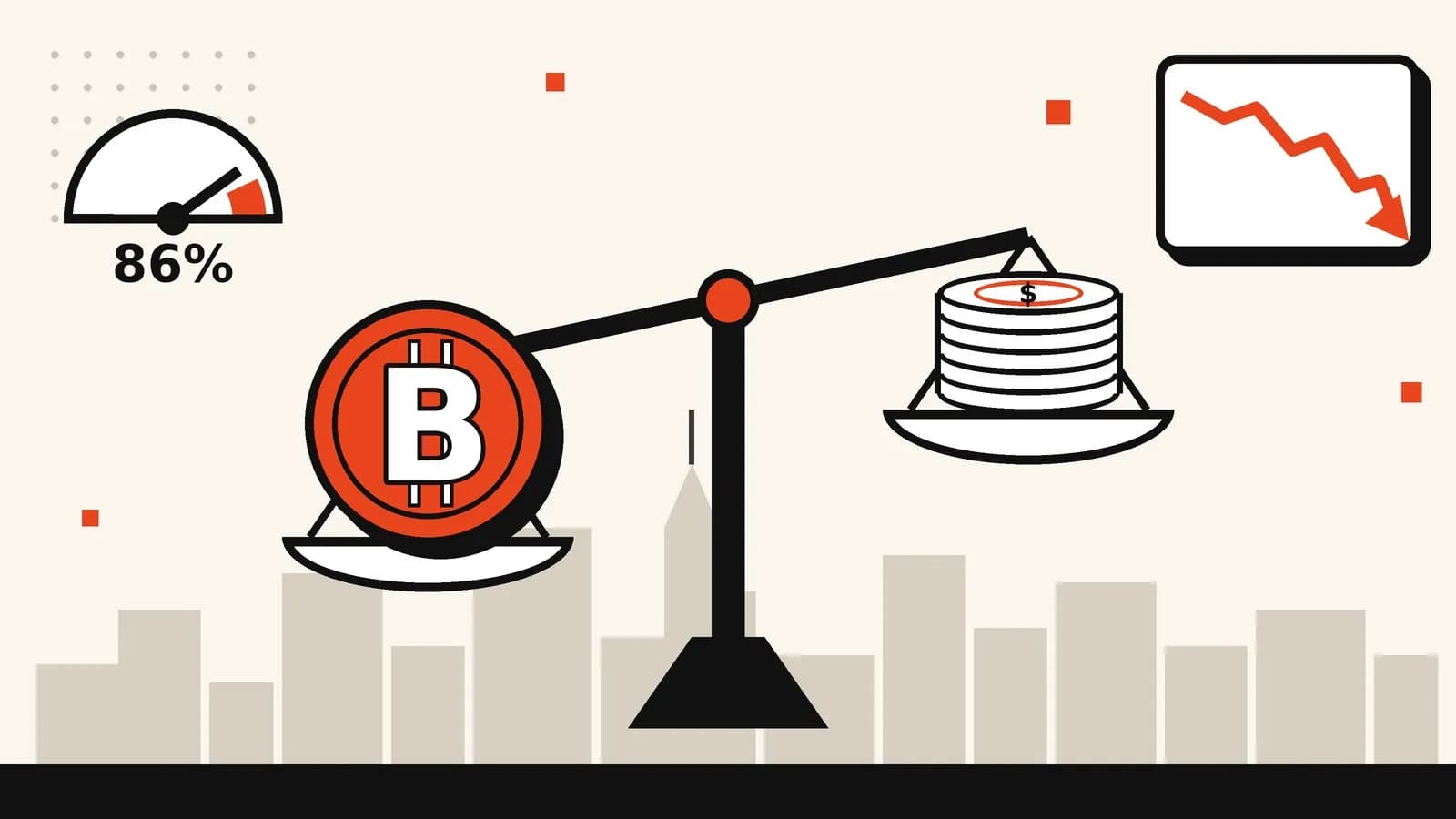
 Polly PhelonyAuthor · DeFi
 Editor-in-ChiefEditor · checked this story
Published November 18, 2026 at 12:02 PMUpdated November 18, 2026 at 12:02 PM
Coinbase has opened Coinbase Borrow, its USDC loan product built on Morpho, to New York residents after approval from the state's Department of Financial Services, a company spokesperson told theblock.co on Nov. 17. New York was the last holdout, so the product now covers all 50 US states. Coinbase did not give application or approval dates.
New Yorkers can borrow up to $5 million in USDC against bitcoin, $1 million against ether and $100,000 against Solana. Fixed-rate loans, tokenized gold (PAXG), ZEC, HYPE, XRP and staked assets are not available in the state yet, and neither is Coinbase's separate USDC lending product. Since the January 2025 launch, more than $3.4 billion in loans have been originated, and more than $1.6 billion is still outstanding, according to morpho.org. Coinbase's earlier move into regulated banking, its final OCC approval for a national trust bank, is a separate track.
Where the collateral goes
Coinbase acts as the interface, and the loan itself is sourced on the Morpho protocol. When a customer pledges bitcoin, Coinbase converts it 1:1 into Coinbase Wrapped BTC (cbBTC) and moves it into a Morpho smart contract on Base. Morpho then sends the USDC to the customer's Coinbase account.
The interest rate is variable. Morpho's open lending market sets it, and Coinbase says it can change with every block on Base. There is no repayment schedule or minimum payment, but interest keeps accruing on the balance, and Coinbase charges a one-time fee each time a customer borrows, added to the principal.
When a loan gets liquidated
Loan-to-value (LTV) is the outstanding debt, interest included, divided by the market value of the collateral. For bitcoin, the coinbase.com product page sets the trigger at 86%. At that point the protocol sells enough collateral to repay the loan plus a 4.38% penalty, and returns what is left. The threshold differs by asset, and Coinbase's help pages also show examples at 77% and 62.5%. Coinbase states that it "cannot prevent your collateral from being liquidated on Morpho." For the general mechanics, see how crypto liquidation works.
The timing matters. Bitcoin traded at $64,835 per CoinGecko at 07:58 UTC on Nov. 18, after the drop that brought $2 billion in liquidations as bitcoin hit a July low. By our arithmetic, a customer who borrowed $50,000 against $100,000 of bitcoin starts at 50% LTV and reaches 86% if bitcoin falls about 42%, to roughly $37,700, before accrued interest moves that line higher.
Coinbase emails borrowers when a loan enters the "danger" zone, 90% to 100% of the threshold. An optional loan protection feature tops up collateral automatically from the customer's balance, but it runs only once per activation and Coinbase says it is not a guarantee. In a market-wide drop that triggers many loans at once, the system tops up the loans closest to liquidation first.
This story is for information only and is not investment advice. Crypto assets are volatile and you can lose everything you put in. You decide on any trade yourself. Disclosure
Comments0
Comments are moderated. Ads, insults, and trading calls are removed. Discussion rules
No comments yet
Be the first — the author reads the thread and answers questions.