
Keystone hackers stole the key that proves its wallets are genuine
Keystone says attackers took the key its wallets use to prove they are genuine, plus data on 25,964 buyers, and it will destroy 18,835 unsold devices.
All news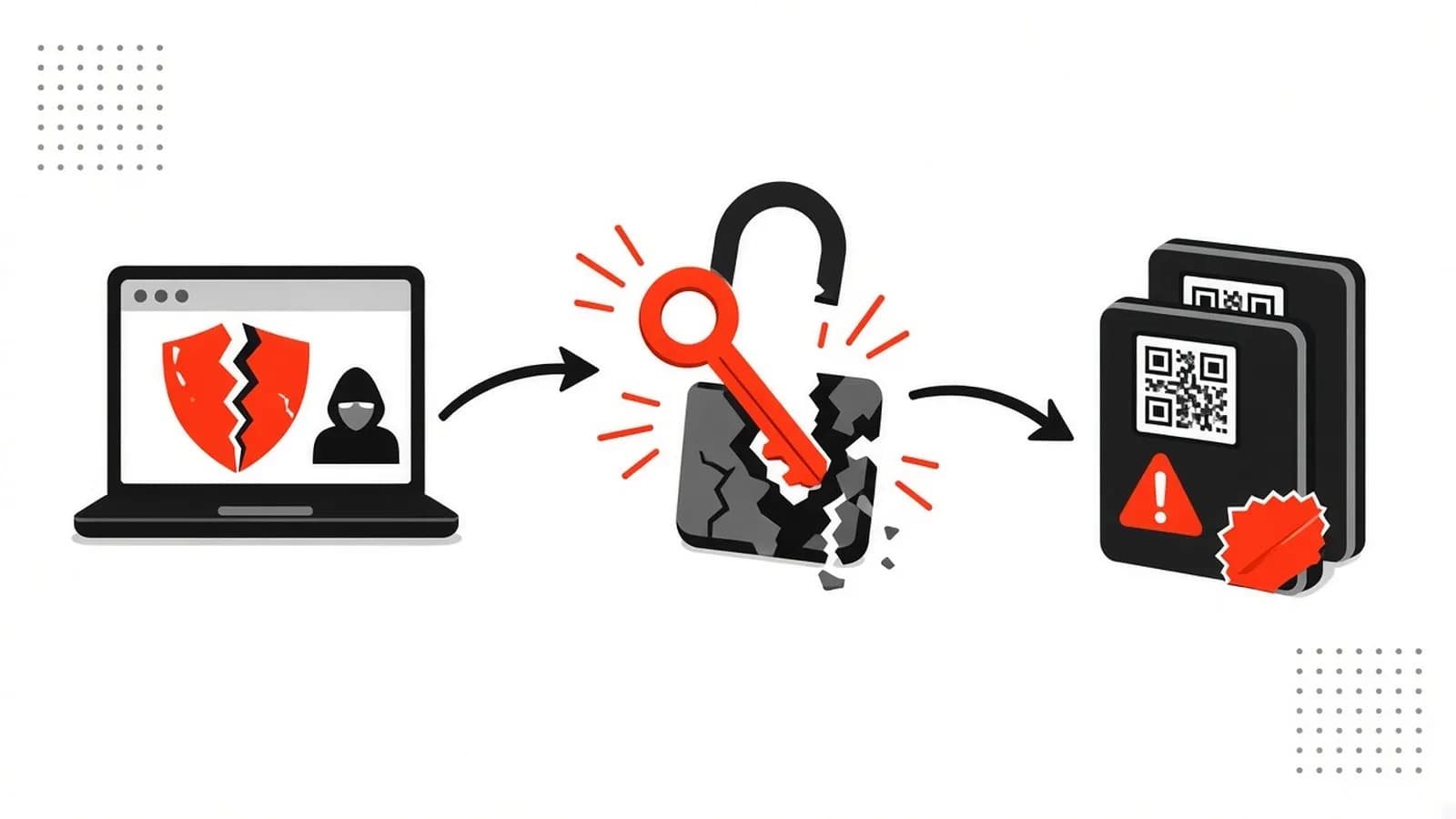
 Polly PhelonyAuthor · Blockchain
 Editor-in-ChiefEditor · checked this story
Published October 27, 2026 at 07:02 PMUpdated October 29, 2026 at 08:58 AM
Hardware wallet maker Keystone said on October 26 that an attacker who broke into its website took the WebAuth key its devices use to prove they are genuine, along with personal data on 25,964 buyers. The company will destroy 18,835 unsold wallets and has paused shipping from its online store.
The update, published as a statement on x.com, goes well beyond Keystone's first disclosure on October 24, which described the incident as a leak of shipping information. Recovery phrases, private keys, card details and ID numbers were not involved, the company said.
Why a stolen key matters for every device already shipped
Keystone owners check a new device by scanning a QR code on the company's authentication page and typing back the code the wallet displays. Only a device holding the key can produce the right code. The key is written into each unit during manufacturing and cannot be erased or replaced, so wallets already in customers' hands keep the old one.
Anyone with a copy could build a counterfeit that passes the same check. Keystone said such devices could be sold or shipped to buyers and lead to stolen funds. It has not reported any fakes or thefts so far.
The company draws the line at October 20, the day it detected the intrusion. A device delivered before that date that passes authentication can be used normally. For units received later with the old key, Keystone wrote that "we cannot completely rule out the possibility that it is counterfeit" and asked owners to contact support before using them. As thehackernews.com noted, the company has not explained how an owner can tell which key a device carries.
A deletion tool that quietly failed
The attacker got in through a flaw in a third-party data monitoring tool on the website and escalated privileges from there. The exposed records, stored in Keystone's Shopify store, cover purchases from 2024 to 2026 and include names, contact details, addresses and order details. Another 12,873 unpaid checkout records were added to the response as a precaution.
Some of those records should not have existed. Keystone's policy promised deletion after 180 days, but an automated bulk-erasure tool it built failed on some tasks, and the company did not catch it in time. "We failed to fulfill our commitment to erase customer data on time, and we accept responsibility for this failure," the company wrote. It is cutting retention to 90 days.
The leak gives scammers a ready list of verified hardware wallet buyers. Keystone warned that it will never ask customers to return a device and that offers of "asset migration" or "wallet verification" are fraud. Fake recall and support schemes are a standard follow-up to leaks like this, much like those used by scammers draining crypto wallets, and security failures have already cost the industry $4.67 billion to hacks in two years.
According to coindesk.com, the disclosure came a day after rival maker Foundation reported a phishing campaign aimed at its own customers. Keystone said Shopify should finish erasing its overdue buyer data on November 3. It has not given a date for resuming shipments.
Tags
This story is for information only and is not investment advice. Crypto assets are volatile and you can lose everything you put in. You decide on any trade yourself. Disclosure
Comments0
Comments are moderated. Ads, insults, and trading calls are removed. Discussion rules
No comments yet
Be the first — the author reads the thread and answers questions.